
What a Skipped Winter Check-Up Actually Costs You
Hurricane season doesn't end until late November, and the cold fronts that roll through the Keys from December on bring their own gusty wind events — sometimes strong enough to stress a garage door that's already been weakened by months of salt air and summer storms. Skip the winter check now and you're betting that corroded hardware, a sagging track, or worn weatherstripping holds up through the next hard blow. If it doesn't, you're looking at a door that comes off its track, a panel that buckles inward, or water finding its way into the garage during a wind-driven rain. Any of those turns a $150-$400 repair into a $1,000-plus panel or full-door replacement, plus whatever gets damaged inside the garage.
Why This Stretch of the Year Is Harder on Your Door Than It Looks
By the time winter arrives, your garage door has already spent months absorbing humidity, salt air, and afternoon downpours. Wood and composite panels swell and don't always shrink back evenly, which throws off alignment. Steel hardware — hinges, track bolts, roller shafts — picks up surface rust that's easy to miss until it's seizing a roller or weakening a bracket. Then the drier, breezier months bring cold fronts with sustained wind and gusts that load up against the door face. A door that was fine all summer can suddenly reveal problems once it's pushed by wind instead of just sitting there.
Inspect for Damage Hurricane Season Left Behind
Before the next wind event, walk the door and look for what the season already did:
- Track alignment: stand back and sight down each track — any gap, bow, or spot where the rollers aren't sitting flush is a sign the track shifted, often from wind pressure or a door that was forced while off-balance.
- Panel condition: check for dents, hairline cracks, or soft spots, especially near the bottom panel where splash-back and standing water do the most damage.
- Water staining inside the garage: stains along the bottom of the door or on the garage floor near the threshold usually mean the seal failed during a heavy downpour.
- Weatherstripping: press on the bottom seal and side seals — if they're cracked, flattened, or pulling away from the track, they won't hold up against driving rain or wind-pushed water.
Salt Air and Rust: The Hardware Check
Salt air doesn't wait for a named storm to do its work. Go over the hardware with a flashlight:
- Springs — look for pitting, flaking, or orange rust bloom along the coils. A corroded spring is a spring that's more likely to snap under load, and torsion springs under tension are not a DIY repair.
- Hinges and rollers — rust here causes binding, which puts extra strain on the opener motor and the springs trying to compensate.
- Track bolts and brackets — a loose, rusted bolt is one of the more common reasons a track pulls away from the wall during a strong gust.
- Lubrication — a silicone-based garage door lubricant on hinges, rollers, and the torsion bar helps displace moisture and slow corrosion; avoid regular household oil, which attracts grit.
Test the Opener and Wind-Load Performance
Run the auto-reverse safety test: place a block of wood (a 2x4 works) in the door's path and close it — the door should reverse on contact. Also test the photo-eye sensors by waving an object through the beam while closing. If your opener has a battery backup, confirm it's still holding a charge, since cold fronts in the Keys can knock out power along with the wind. If your door is rated for wind load, make sure nothing about recent repairs or panel swaps has compromised that rating — a mismatched panel or improperly reinforced track undermines the whole system's ability to handle gusts.
Weatherproof While the Weather's Calmer
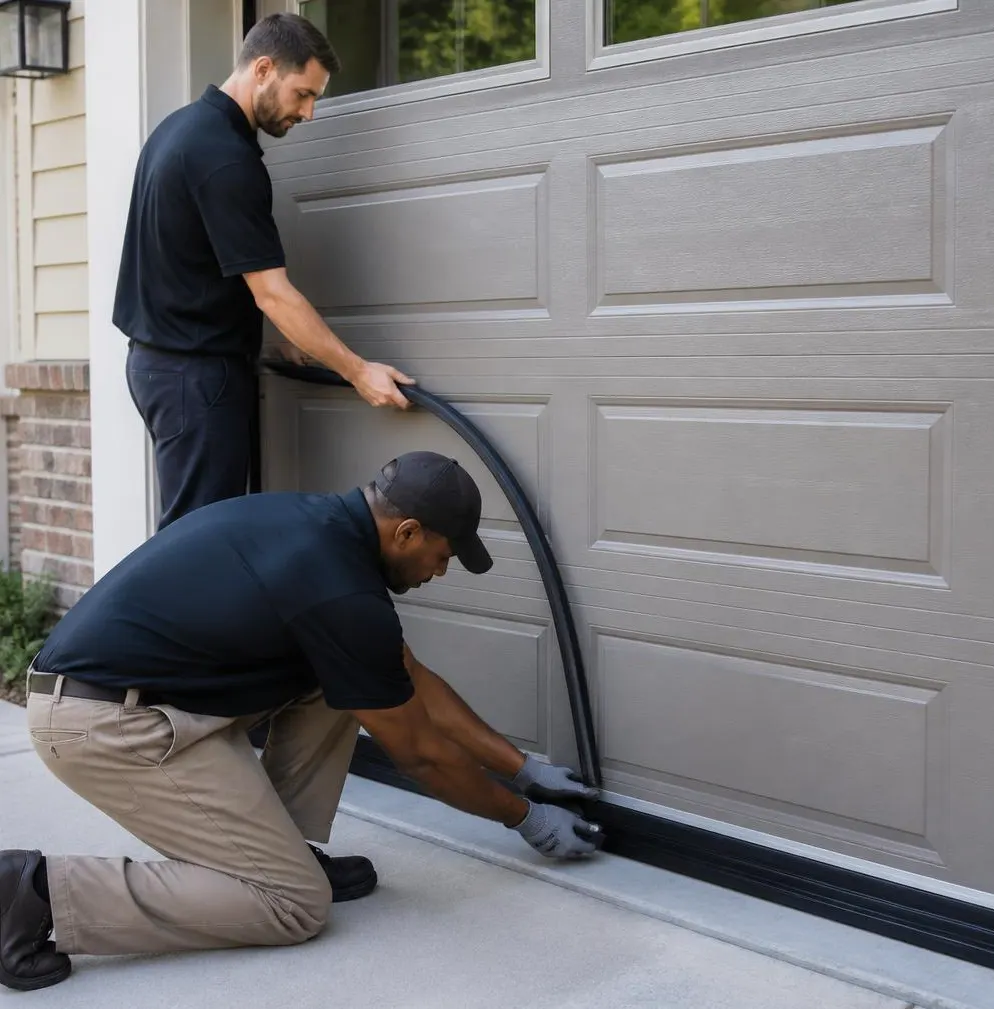
The stretch between storm systems is the easiest time to reseal. Replace worn bottom seals and side weatherstripping now rather than waiting for the next downpour to expose the gap. Check that the garage floor still slopes away from the door opening so water drains out instead of pooling against the threshold.
When to Call Key Colony Beach Door & Opener
If you're seeing rust on springs or hardware, a track that's visibly out of alignment, or a door that's noticeably harder to lift than it used to be, it's worth having it looked at before the next cold front rather than after. We handle Garage Door Spring Repair for corroded or weakened springs and Garage Door Maintenance & Tune-Up service that covers track alignment, hardware inspection, and opener testing in one visit — the kind of once-a-season check that catches small problems while they're still small.
If your garage door needs a winter check before the next round of Keys weather moves in, call Key Colony Beach Door & Opener and we'll get it handled.